Enjoying honeymoon in Kerala may become memorable for any married couple, and why not, Kerala is one of the top honeymoon spots in India. It offers the natural beauty of Kerala backwaters, sun bath at Kovalam beach, hills of Munnar & Wayanad, endless tourist spots in Cochin/Kochi, Allepey and Kottayam which makes your honeymoon too romantic & most enjoyable. There are also plenty of hidden tourist attractions for honeymooners.
Best time to visit Kerala: December, November, October, March, February, January
Goa
There is no doubt Goa is the one of the most visited and ultimate honeymoon spots in India , blessed with numbers of natural beaches, coconut plants, lush green gardens, heritage monuments and famous Portuguese buildings. You can enjoy there romantic walk on the beaches with your life partner, a Champagne morning breakfast, night beaches parties, delicious sea foods at famous restaurants, water sports, deep sea fishing, parasailing and wind surfing with your life partner to makes your honeymoons something to memorable.
Top recommended places for honeymoon in Goa
Betalbatim Beach
Agonda Beach
Fort Aguada
Dudhsagar Waterfalls
Basilica
Best time to visit Goa: March to May(summer), October to February(winter)
Kullu Manali
Manali is one of the most popular honeymoon places for whom looking for ice-cold hill station for have a good time. Kullu Manali is all time favorite honeymoon destinations for Indian married couples as well as foreign travels. It blessed with green hills, snow covered mountains, waterfalls and big green grass landscape. Manali is also one of the best tourist places in India for adventure sports e.g. skiing, hiking, trekking, mountaineering, paragliding, river rafting, angling, and biking which can impress any married couple for entertain together.
Best time to visit Manali: October to February
Darjeeling
Darjeeling, again one of the top visited hill stations and most romantic honeymoon destinations of India, famous for its pleasant cold climate, natural beauties of pine trees, tea gardens, mountains, local traditional market and most famous toy train journey. There are some top suggested tourist attractions which can impress any tourist in the world like Tiger Hills. It is only eight kilometer (8 km.) away from main Darjeeling city which famous for its panoramic view of the sun rises and the blissful view of the picturesque Darjeeling, magnificently decorated by the dazzling beauty of nature. There are also some others tourist spots where you should once-
Batasia Loop
Rock Garden
Singamari Ropeway
Darjeeling toy-train Journey
Kanchenjunga Mountains
Peace Pagoda
Best time to visit Darjeeling: September to January
Shimla
The romantic climate, green hills, snow covered mountains, adventure sports, swaying fields and gorgeous view of Himalayas makes Shimla one of the most favorite honeymoon places in India. Shimla blended with some best natural beauties and tourist places which I would definitely recommended for honeymoon couples e.g. Hip Hip Hurray Amusement park, Jakhu temple, The Mall, The Ridge, lower bazaar, Viceregal Lodge, Dorje Drag Monastery, Christ Church and more. There are also plenty of brand restaurants, coffee shops, fashion shop where you can spend your honey time with your life partner. Find here list of top 10 five star hotels in India with brief info.
Lakshadweep
Lakshadweep is as popular as Kerala among travelers for honeymoon in India because of its unbeaten natural beauties of Island & sandy beaches, the ultimate view of blue sea & scenic gardens, water sports & sunbathing. Lakshadweep offers a calm & romantic environment for honeymooners who want to just lose themselves. If you are planning for Lakshadweep honeymoon, some top recommended places where you should must visit-
Kavaratti
Minicoy
Agatti
Kadmat
Bangaram
Best time to visit Lakshadweep: October to April
Andaman and Nicobar Island
Andaman and Nicobar Island is the gateway of romance with exotic environment, top-notch hotels, tourist privacy, superior dining, adventurous sports & activities, makes it one of the best honeymoon destinations in the World. You can enjoy there the under-water marine life with varieties of colorful fishes, water-skiing, sail boats, windsurfing, speed boats, sunken ships, jungle life, flora and fauna. It is also the right place if you are a sea food lover. You can taste there India’s best sea foods recipes as well as any other Indian traditional foods. And don’t worry; there are plenty of finest options for your nigh-tout and stay.
Best time to visit Andaman and Nicobar Island: November, October, May, April, March, February, January
Ooty
Ooty, situated at the hills of Nilgiri, one of the most beautiful and romantic honeymoon destinations in India. Ooty is well known as the ‘Paradise for Honeymooners’, and there is no doubt it is the best naturally blessed charming hill stations of entire South India. Ooty is a perfect honeymoon place for those couples who wants away from the crowd and enjoy quality honey time together. There are lots of tourist attractions & places in visit in Ooty-
The Nilgiri Toy Train Ride
Botanical Gardens
Angling in Ooty
Boating at Pykara Lake
Glen Morgan Tea estate
Best time to visit Ooty: October to June
Nainital
There is no doubt Nainital is the dream destination for holidays and honeymoon in North India. It is best known for pleasant climate, lakes, boat riding, water sports, candle light dinner, local shopping market, rock climbing, ride to snow View, fishing enthusiasts etc. For more enjoy the Nainital tourism you may visit famous mall road. There is also some other top recommended place for you if you choose Nainital for your honeymoon-
Aerial Ropeway
Jim Corbett National Park
The Lakes
Kausani
Best time to visit Nainital: March to June(summer), October to February(winter)
Mahabaleshwar
If you are looking a place which offers mountains, green hills, waterfalls, lakes, caves, boat riding, adventurous activities, romantic spots, temples and delicious food points, then Mahabaleshwar is the best choice for your honeymoon. Mahabaleshwar is also very close to Mumbai and Pune both. So if you are planning to visit Mahabaleshwar, you can also plan for travel to Mumbai and Pune.
Best time to visit Mahabaleshwar: March to June(summer), November to March(winter)
India country is rich bio-diversity and various Religions , Cultures and Languages. Though there are many religions in India you can find "UNITY IN DIVERSITY" among the people of India. That's why India is called a Secular State.
Hinduism dates from 1500 BC, its precepts being defined in the Bhagwat Gita, Vedas and The Upanishads. By the 11th and 12th centuries AD, Hinduism was priest-dominated and tied down by the unrelenting caste system.
MOST AMAZING PLACE TO VISIT
DELHI
INDIA GATE
India Gate is a stone monument dedicated to the memory of the Indian soldiers who fought and died in the First World War It ranks as one of the primary places of interest in Delhi. The Indian soldiers were part of the British army and represented the military might of the British Empire at the height of its powers. India Gate was designed by Edward Lutenist and took 10 years to complete. The structure of India Gate is a triumphal arch, which is 42 meters high. MUST WATCH THE LASER SHOW!!The Rashtrapati Bhawan is a renowned monument in Delhi. It is said to be the palace of the then Viceroy of India. At present, the Rashtrapati Bhawan is house of the President of India. The building was designed by Edwin Lutyens. The construction began in 1911 and it took 19 years to finish its construction. There is a wonderful Mughal garden towards the west of Rashtrapati Bhawan. It opens up to public every spring. Tours to Rashtrapati Bhawan and Mughal Gardens are available with a nominal registration fee of Rs.25. Visitors in a group of 30 and more shall be offered discounted rates and children below 12 years will not be charged any fee
The Rashtrapati Bhawan is a renowned monument in Delhi. It is said to be the palace of the then Viceroy of India. At present, the Rashtrapati Bhawan is house of the President of India. The building was designed by Edwin Lutyens. The construction began in 1911 and it took 19 years to finish its construction. There is a wonderful Mughal garden towards the west of Rashtrapati Bhawan. It opens up to public every spring. Tours to Rashtrapati Bhawan and Mughal Gardens are available with a nominal registration fee of Rs.25. Visitors in a group of 30 and more shall be offered discounted rates and children below 12 years will not be charged any fee.
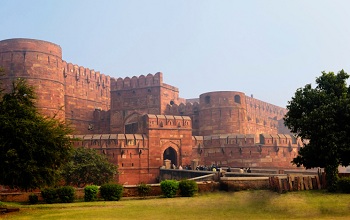
This red sandstone fort extends 2 km wide and differs in height from 18 meter on the river side to 33 meter on the city side. The fort was constructed by Shah Jahan in 1638 and was completed in 1648. Inside there are buildings, including the Hall of Public Audiences, the Drum House, the white marble all of Private Audiences, the Pearl Mosque, Palace of Color and the Royal Baths.Decorated with Persian, European and Indian art forms the fort is one of the brilliant pieces of architecture
Category : Religious Jama Masjid located in Old Delhi is one of the principal mosques of Delhi. One of the last architectural extravagances of Emperor Shahjahan this is one of the largest mosques in India and its courtyard can hold around 25000 people. Construction of this mosque began in 1644 and was completed in 1658 by 5000 artisans. The Jama Masjid has three great gateways and four angle towers and two minarets standing 40m high and is constructed of alternating strips of red sandstone and white marble.
Category : Religious Gurudwara Bangla Sahib in New Delhi is worth a view at the occasion of all the gurupurabs and Guru Nanak Jayanti is no exception. The gurudwara is illuminated beautifully for the occasion and special kirtan programmes are held to culminate two day long Akhand Path. The entire atmosphere of the place is absolutely serene. If you happen to be in Delhi around the time, don't miss the opportunity to pay a visit to the place.
Category : History & Culture Located on Sansad Marg in Connaught Place, this structure is one of Maharaja Jai Singh 2's observatories. This ruler from Jaipur constructed this observatory in 1725 and is dominated by a huge sundial known as the Prince of Dials. Other instruments in this observatory follow the course of heavenly bodies and predict eclipses. It was built in 1724 by Raja Jai Singh II of Jaipur in Delhi. Jantar Mantar of Delhi, is an astronomical observatory with masonry instruments. Jantar Mantar has instruments that can graph the path of the astronomical universe.
Category : History & Culture The Qutub Minar located in Delhi is the world's tallest brick minaret, standing at a height of 72.5 meters. Commissioned by Delhi's first Muslim ruler, Qutb-ud-din Aibak in 1193, Qutub Minar then had only a basement. Three more towers were added to the structure by his successor and son-in-law Shamsu'd-din Iltutmish. The Qutub Minar is known to be the earliest and most evident example of Indo-Islamic architecture and is surrounded by several other ancient structures collectively known as the Qutub Complex.
Category : Religious The Bahai Temple or the Lotus Temple as it is popularly known because of its flower-like shape is located in the southern part of Delhi. Designed by Iranian-Canadian architect Fariburz Sahba in 1986 it has 27 immaculately white petals. This temple is a Bahai house of worship and is also among the popular tourist attractions in Delhi; winning many architecture awards and being featured in many magazines and newspapers. The best time to visit the Lotus Temple is between October to March as the weather is Delhi is very pleasant for sightseeing during these months of the year.
Akshardham Temple
Category : Religious India being the land of temples, finds its true reflection in Delhi. Akshardham is one of the most important religious sites in Delhi, which has claimed to fame for its piety and spirituality. One of the most important Delhi Monuments, it is also known for its architectural magnificence with its 234 pillars, 9 domes and 20 quadrangled shikhars-all displaying fine artistry and craftsmanship. Built on the lines of Sthaapatya shastra of India, the Akshardham in Delhi is the ideal example of a designers creativity and an engineers ingenuity.
Built by carving 6000 tons of pink sand stone brought from Rajasthan, the craftsmanship lies in the temple's design, which has nothing to do with metals like steel and iron. The beauty of the temple is encaptured in the fine filigree on the walls and the pagoda, which display the sadhus and saints in various meditative postures.
Category : History & Culture Raj Ghat in Delhi is the sacred sight where the Father of the Nation, Mahatma Gandhi was cremated. Following the assassination of Mahatma Gandhi on 30th of January, 1948, his body was cremated in Raj Ghat the next day. Raj Ghat is located on the western bank of River Yamuna, and therefore was considered to be the best place for the creation of the memorial of Mahatma Gandhi.
Raj Ghat can be described as a simple square shaped platform, with a black memorial stone, which has the words "Hey Ram" engraved in it. These were the last words that came out of the mouth of Gandhiji before he took his last breath. The Samadhi consist of a black marble platform, of the same size that of the brick platform in which Gandhiji was burnt. The Samadhi of Mahatma Gandhi has been surrounded by beautiful plants and trees that provide a peaceful ambience. It is also protected by high walls. Two museums, constructed in the nearby areas are dedicated to Mahatma Gandhi. The Samadhi of Jawaharlal Nehru was also constructed to the north of Raj Ghat in Shanti Van.
Category : History & Culture Purana Quila is a rectangular shaped fort that is spread nearly two kilometers wide. There is a small archaeological museum just inside the main gate and there is a good view of New Delhi from atop the gate. A Sound and Light Show is held here every evening.
Category : Garden Once called the Lady Willingdon Park, the Lodhi Garden contains tombs of Mubarak Shah, Ibrahim Lodi and Sikander Lodi among its well kept lawns and trees. The garden is a favored spot for early morning fitness freaks and those seeking solitude.
Category : History & Culture Located near Mathura road, this magnificent garden tomb is a fine example of Mughal structural design in India. It was built in 1565 by his widow Hamida Banu Begam, after the death of Humayun. Inside the enclosure is the garden squares with pathways and water channels.
Category : History & Culture It is the last enclosed garden tomb in Delhi with tradition to the Humayun's Tomb. Built in 1754, the tomb of Safdarjung is less grand in scale and size. It has a number of smaller pavilions like Jangli Mahal, Moti Mahal, Badshah Pasand and Madarsa.
Category : History & Culture One of the biggest commercial areas in Delhi, Connaught Place has lots of variety of shops, businesses, restaurants and emporiums for every taste and budget.
Category : Fun & Entertainment It provides an ambience of a traditional market, but one fitting the more modern needs. One can see a mixture of crafts, food and cultural activity. It's a place where Indian culture and ethnic cuisine come together, a unique bazaar that exhibits the affluence of Indian culture.
Category : Religious Built in 1938 by the Industrialist G.D. Birla, it is one of the major temples in Delhi and is located near Connought Place. The temple is dedicated to Goddess Laxmi and her consort Narayana. The temple was inaugurated by Mahatma Gandhi on the stipulation that people of all castes shall be allowed to enter the temple.
Category : Religious Popularly called as the Hare Krishna temple, it's a famous temple with idols of Sri Sri Radha Krishna. Located in South Delhi, the temple is mainly built with red stone is acknowledged for its distinctive architecture that blends the traditional Vedic style with modern style.
Tughlaqabad Fort
Category : History & Culture In 1321, Ghazi Malik of Tughlaq built the strongest fort in Delhi at Tughlaqabad within four years of his rule. It is the most massive and spectacular fort even in its ruined state. Within its walls, bastion and huge towers are impressive palaces, marvelous mosques, and grand audience halls.
Chandni Chowk
Category : History & Culture It is one of the oldest and busiest markets in Delhi and Asia's largest wholesale market. Created by Shah Jahan, the market stretches in the old city from the Red Fort to Jama Masjid.
National Agricultural Science Museum
Category : History & Culture Situated in the National Agricultural Science Centre campus of ICAR, it is the first of its kind in the India. A specially designed double storey building of 23,000 sq ft floor area depicts the development of agriculture in India since ancient time and the current state-of-the-art technology in agriculture in our country with future prospects.
National Museum Category : History & Culture Located on the Maulana Azad Road, it is one of the largest museums in India and holds a variety of articles ranging from pre-historic era to contemporary works of art. Managed by the Ministry of Culture, it is a part of the Government of India.
AGRA
Blessed with one of the seven wonders of the world -Taj Mahal,Agrais one of the most prominent tourist destinations ofUttar pradesh . Agra is also known as the Land of palaces. Not just palaces, it also has a lot of intricate and beautiful architecture. Even the tombs are elaborately adorned. Agra is the perfect spot for a tourist and students of Architecture. Even the climate in Agra is very inviting and suitable. The city is well designed, where even the houses show huge detailing in their design. On close inspection, even the interiors of the buildings show the unreal imagination that the architects probably had. Every building, looks like it had been designed to adorn the city, designed artistically from every angle.
Category : History & Culture The Taj Mahal is one of the most famous tourist attractions in India and across the world. It's one of the Seven Wonders of the World. Completed in 1653, The Taj Mahal was built by Mughal Emperor Shah Jahan in memory of his beloved wife Mumtaz Mahal, as a symbol of eternal love. Taj Mahal is built on a red sandstone base, topped by a huge white marble terrace on which rests the dome flanked by four tapering minarets. The floors and walls have intriguing calligraphy and mosaic work adorned with precious stones.
Category : History & Culture Agra fort was commissioned by the great Mughal Emperor Akbar in 1565. During Shah Jahan's era, the red sandstone fort was reformed into a palace and extensively repaired with marble and pietra dura inlay.
Distinguished buildings in the fort are the Pearl Mosque, Jahangir's Palace, Diwan-e-Am, Diwan-e-Khas (public and private audience halls), Shish Mahal, Musammam Burj and the Khas Mahal. The fort is semi-circular shaped, flattened on the east with a long, nearly straight wall facing the river.
Category : History & Culture This Mughal Mausoleum in the city of Agra was built at the command of Noor Jahan (wife of Jahangir) for her father Mirza Ghiyas Bagh, who was honored with the title of Itmad-ud-Daula (pillar of the state). This is where the mausoleum took its name from.
The walls of the mausoleum are built in white marble and embedded with semi precious stones. The cenotaphs of both the father and mother of Noor Jahan lay side by side in the tomb.
Category : History & Culture Founded by the great Mughal emperor Akbar, in the year 1569, Fatehpur Sikri served as the capital of the Mughal Empire during the years 1571-1585. Named as Fateh (meaning victory) in the beginning, it was later known as Fatehpur Sikri. It was home for the birth of navaratnas (9 jewels). It stands as a representation of the infamous Mughal architecture with unique designs and artworks. The building was made of red stones and Akbar intended to revive the Persian court splendors made by his ancestor Timur, but eventually it came through as the classic Indian embellishments. The Fatehpur Sikkim was deserted after its completion due to natural calamities of insufficient water further triggered by the proximity of the Rajputana areas. The city is a piece of art that surrounds brilliant works by great minds of the strong Mughal period influenced by the emperors.
Category : History & Culture Built solely for the great Mughal emperor, the Akbar Tomb was built in 1605-1613. It covers a good area of 119 acres in the Sikandra. It was Akbar himself who initiated the works in 1600 as per the Tartary tradition. Located in the suburbs, about a kilometer away lies the tomb of Miriam, Akbar's wife. The southern gate is similar to those of the Taj Mahal with 4 white marble chhatri and also serves as the entrance to the tomb. A wall of 105m square surrounds the tomb. The fake tomb is located in the marble pavilion placed inside a 4 tier pyramid building while the true tomb is safely kept in the basement. The building is made up of red sandstones with touches of white marble. One of India's greatest assets, the tomb is an attractive tourist spot, with people eager to see the tomb flooding the place.
Category : Religious Built in the 1648s, by Shah Jahan, Jama Masjid stands facing the Agra fort and overlooks the Agra Fort Railway Station in India. It was built by Shah Jahan in dedication to his favorite daughter. In order to create the Agra Fort Railway Station, the octagonal Tripolia Chowk was destroyed. The main entrance is on the eastern side. The prayer chamber is decorated with slender turrets with alternate kiosks. It is said to be the largest dome among the three and also the highest, crowning the sanctuary. The archway of the central portal has Persian inscriptions on white marble inland with black stones, in praise of Shah Jahan and Jahanara, his daughter. Made of red sandstone and marble, took 5,000 workers a period of 6 years to complete the magnificent building. It stands on a high plinth and has 5 arched entrances leading to the courtyard.
Jahangir's Palace
Category : History & Culture The most noteworthy building in the Agra Fort, Jahangir's Palace is the palace where the Rajut wives lived during Akbar's rule. It was a created as a fusion of Hindu and Central Asian architecture. The palace was a token of the great Mughal emperor, Akbar to his beloved son Jehangir, who later succeeded him to become the emperor. It has a huge bowl known as Hauzi Jahangir which is a master work of art carved from a single stone. It was used to hold the fragrant rose water. This palace was later used by the Mughal Queen Nur Jahan, who used it as her palace. Reflecting the culture, tradition and history of the civilians, this palace conquers it all when it comes to the way it was built with care and expertise. It holds great value for its elusive style. More...
Mehtab Bagh
Category : Garden Mehtab Bagh translated to mean a moonlight garden, is located north of Taj Mahal and the opposite of the Yamuna River. A square garden measuring 300 m by 300 m, it becomes partially flooded by the rain duringrainy season. It was the last garden of the eleven built by the Mughals. It was built by the Mughal emperor Babur. Designed in the riverfront terrace pattern, it contributes a significant part to the Taj complex. The garden was said to be surrounded by a compound wall made of Brick, lime plaster and clad with red sandstone. Octagonal shaped domes were situated in the corners. A small Dalit shrine is present near the entrance. In a letter written to Shah Jahan by Aurangzeb, he mentioned the garden after a flood in 1652 AD. Archeological excavations were started in 1994 to renew the garden and give it a new flair. More...
Guru Ka Taal
Category : Religious Located near Sikandra, the Guru Ka Taal is the Sikh pilgrimage dedicated to the 9th Sri Guru Tegh Bahudar Ji. It is the place where he laid down his arms to accept arrest in front of Aurangazeb. Dated back to the 17th century, the building was built in the year 1610. The reservoir was used to provide water during the dry season and was ornamented with precious stone carvings. The Gurudwara was built in 1970 due to the contributions of Saint Baba Sadh Singhji. When first built it had twelve towers, but only eight had managed to survive the years and remain intact. Constructed on red sandstones, it has the finest architecture notable by archeologists all over the world. It holds significance to many more such buildings and is a spot of tourist attraction. A number of devotees pay their respect every year to offer their prayers. More...
Soami Bagh Samadh
Category : Religious On the outskirts of Agra, the Soami Bagh Samadh is situated, in Dayalbagh. Huzur Swami Maharaj (Shri Shiv Dayal Singh Seth) performed many poojas at this place. Hence, the Soami Bagh is of historic importance to the Samadh of Soamiji Maharaj. This place is the mausoleum of the Swamiji. In 1908, this Soami Bagh was constructed. The beautifully carved building has marble uniquely designed and cut to fit into each other and is of architectural beauty. The intricate designs on the marble blended perfectly are of historic interest and brings tourists to this place. The beauty of this creation has been compared to that of the Taj Mahal. The Bhajan Gar, located nearby performs Satsang everyday. The Bhandara festival celebrated here brings the Satsang together at this place. The Radhaswami Faith was established here and is of sacred interest in this faith.
Chini ka Rauza
Category : History & Culture This is a monument in Agra which houses the tomb of Alamo Afzal Khan Mullsh. He was the Prime Minister during the reign of Shah Jahan, the famous Mughal Emperor. He was a renowned poet and scholar. In 1635, this tomb was built in his memory. The exquisitely built building has beautifully glazed tiles that are decorated well and has thus gained architectural beauty. The many inscriptions speak of the technical knowledge of the people in that era. The walls along with these inscriptions and colorful tiles give the building this name. Howeverthe building is mainly of brown stone and is rectangular in build. However, the central chamber is shaped octagonal with curved recesses that are eight in number. Square chambers that are eight in number are linked with the halls. The dome made in Afghan style is rounded and also has many important words from the books of Islam inscribed on it. More...
Mehran Bagh
Category : Garden A charbagh complex situated in Agra has become renowned, mostly due to the proximate location with the Taj Mahal. The Agra fort located opposite it has also grabbed the attention towards these places. Mehran Bagh is a perfect squared garden complex. It is designed such that it becomes partially flooded, especially during times of heavy rain. The complexity in construction sets a new standard for Mughal architecture. Mughal garden research also attained new heights with the dawn of this archaeological masterpiece. Mumtaz Mahals actual tomb has been actually found to be exactly midway between the entrance of the Taj Mahal complex and the ends of Mehran Bagh. The conclusion of the ASI survey led to the commencement of renovation and the restorative work of the garden. It is a site that is visited very frequently, especially by the botanists and by the nature lovers.
Radha Swami Samadhi
Category : History & Culture This ancient tomb is situated about 15 km from Central Agra. It is a glorious building built with maximum utilization of white marbles. This building was built as the Samadhi ( tomb) of the founder of the sect Radha Swami. The founder was lovingly called as 'Swamiji Maharaj'. The Samadhi is adorned with intricate patterns and multifaceted designs on the inside. It is also known as Soamibagh. The construction work commenced many decades ago. However, the belief that the ardent followers hold is that the construction work should continue forever. It should never end. The aim of this continued construction is to make it a living monument. Hence the construction has gone on for 100 years. Despite the incomplete state, the ornate stone architecture has invited tourists from all over the world, to view Indian architecture in all its majesty.
Jaipur
Jaipur - Rajasthan , the glistening Pink City, was founded by and named after Sawai Jai Singh II. It beckons tourists with a magnificent display of its royal Rajput heritage in its imposing forts and impressive palaces.
Added bonus is the warm hospitality of its colorful people and of course a plethora of handicrafts to shop for. Tourists can enjoy watching and participating in various festivals that Jaipur hosts-from the modern Jaipur Literary festival to the traditional Teej, Gangaur and Kite festival.
Summers are very hot in Jaipur, with temperature almost 45°C while the winters are cool and ideal to plan for a holiday, although the temperature may dip down to 8.3°C in winter.
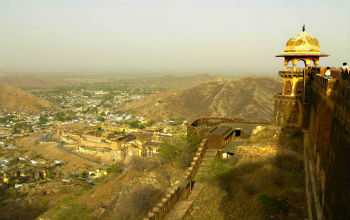
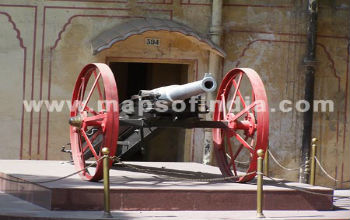
Category : History & Culture This beautiful creation by Maharaja Jai Singh, located at Amber, Jaipur stands on the Cheel Ka Teela (Hill of Eagles), a promontory of the Aravalli Hills. Located 400 metres above and similar in structure with the famous Amber Fort, it was meant to protect the latter. One can reach the Amber Fort through the secret subterranean passage from Jaigarh Fort. This fort is 3 km long and 1 km wide. It has the world's largest cannon on wheels, called Jaivana; a few palace complexes which served as the residences of the royal families; a well maintained garden; and a museum.
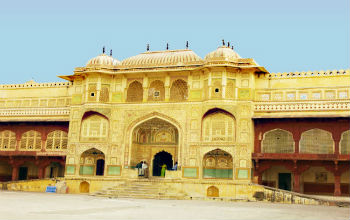
Category : History & Culture This gigantic fort includes two more forts inside, and is located on the north-east part of Jaipur. City Palace was the seat of the kings. It has a huge array of buildings, courtyards, temples and gardens. Its construction was started by Jai Singh following a perfect blendof Indian and European styles of architecture. The magnificent grid pattern encloses Mubarak Mahal, Chandra Mahal, Mukut Mahal, Palace of Maharani, Govind Temple and City Palace Museum. Chandra Mahal, one of the inner forts of City Palace,has a museum of its own and is still a residence of the royal family members.
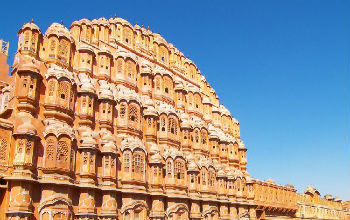
Category : History & Culture Hawa Mahal, or the Palace of Winds, built by Maharaja Pratap Singh, is located on the southern part of Jaipur. This beautifulfive-storeyed building, designed to replicate the crown of Lord Krishna, looks like a honeycomb having about 1,000 small windows. These have latticework that encouraged cool air or doctor breeze to enter the palace, air-conditioning the whole area during thesummers. The pink and red sandstone on the exterior gives it a magnificent look in the morning. The palace is part of the royal City Palace extending till the Zenana or the chambers of women.
Nahargarh fort
Category : History & Culture Standing on the edge of the hills of Aravalli, the Nahargarh Fort gives a mesmerizing view of the pink city of Jaipur. Nahargarh literally means "abode of tigers", evoking the royal legacy of Rajasthan. Maharaja Sawai Jai Singh, who founded Jaipur, built this fort. The fort has been part of important historical events: treaties of the Marathas were signed here, and it was the refuge of British women during the Sepoy Mutiny. The fort served as a hunting residence for the kings. The rooms of this beautiful fort are linked with long corridors.
Jantar Mantar
Category : History & Culture Built by Maharaja Jai Singh, this observatory, officially declared as the national monument, has a huge collection
of astronomical instruments. Beautifully crafted in marble and local stone, it is one of the largest buildings in the
country that is dedicated to the exploration of celestial bodies. It consists of around 14 fixed and focused devices
that measure time, predict eclipses, track stars, and locate earth orbits around the sun.
Jagat Shiromani Temple
Category : Religious
This beautiful temple was erected by the mother of King Jagat Singh, Shringar Devi Kankawat and the construction
took nine years to complete, from 1599 to 1608. The west-facing temple is dedicated to the Hindu gods Radha
and Krishna, and the building consists of a gaduda chatri, marble torana, a vestibule, a square sactrum crowned
with sikhara, a mandapa that lies on a decorated pitha followed by the jangha and vedibandha. The holy mandap
has several pillars decorated with lateral transepts and a vaulted ceiling with religious paintings.
Category : History & Culture
Literally translated to "Water Palace", this beautiful architecture is situated in the middle of a lake called the Sagar
Lake, in the city of Jaipur. Both these were renovated as well as enlarged by King Jai Singh in the 18th century.
The halls inside the palace at the first floor are well decorated, but cannot surpass the aromatic beauty of the
Chameli Bagh upstairs. The area is surrounded by the Aravallis, other forts, temples, and mesmerizing natural
beauty. The lake has well established drainage system, required depth for fishes to be alive, and five
man-made islands for attracting migratory birds. More...
Albert Hall
Category : History & Culture
It is one of the oldest museums in Jaipur as well as in India, and was built by Sir Samuel Jacob in the 19th Century.
It is known as the state's museum for Rajasthan and is also well known as the Government Central Museum. The
beautiful building is located in the Ram Niwas garden, and stands as the epitome of the conglomeration of the Indo
Saracen architecture. Here one can find a rich collection of numerous artifacts like carpets, paintings, stones
, ivory, sculptures made up of metal, crystal works decorated with colours and every item that depicts the royal culture
of Rajasthan.
Govind Devji Temple
Category : Religious
Govind Devji Templelies inside the City Palace. The Krishna deity, said to be the facial image of Lord Krishna,
is originally from Vrindavan and was re-installed here by Jai Singh II. The Lakshmi Narayan Temple lies close to
Moti Doongri Palace.
Sisodia Rani Palace
Category : History & Culture
Other interesting spots some distance away are Sisodia Rani Palace, newly renovated with beautiful gardens, and
Gaitor, a memorial to former Maharajas. At Galtaji there is a sun temple.
Shimla
Shimla, the capital of Himachal Pradesh, is one of the top tourist destinations in India. The picturesque city is situated in the northwestern part of the Himalayan Mountain Range and the mean elevation of the city is 7,234 feet (2,205 metres). A Shimla location map shows the different highways, rail lines, railway stations, hospitals, hotels, educational institutions, religious places, water bodies, and other important places of interest in the city
Christ Church
Christ Church One of the oldest churches in North India, Christ Church was built by the British in 1857 to serve the large Anglican British community in the area. Built in the Neo-Gothic style of architecture, Christ Church is one of the long lasting legacies of British rule in India and is one of Shimla's most recognized landmarks.
Jakhoo Temple
The Jakhoo Temple is an ancient temple dedicated to Lord Hanuman. Located on Jakhoo Hill, 2.5 km from the Ridge, the Jakhoo Temple offers beautiful views of the Shivalik Mountains and the nearby town of Sanjauli.
The Shimla State Museum houses a huge collection of magnificent paintings, sculptures, coins, handicrafts, photos, etc of not only the state of Himachal Pradesh but outside too. The state museum is a major attraction of the Mall area of Shimla built in the style of colonial edifice with sprawling lawns all around. This museum was inaugurated in 1974.
Goa
Candolim Beach Category : Nature Located 14 kms north of Panaji in the state of Goa, the Candolim Beach is a part of a long extension of beach coastline along the Arabian Sea that begins at Fort Aguada and ends at Chapora Beach.This place is also famous as it is the birth place of Abba Faria, considered to be one of Goan freedom fighters and the Father of Hypnotism.
Sinquerim Beach
Category : Nature The Sinquerim Beach of Goa is located some 13 km away from Panaji and is stunningly beautiful and quieter than the other beaches of Goa. This long, extended sandy terrain that runs incessantly along the coast is ideal for taking a walk. The feel of the glistening sands and the cool water caressing the feet gives you out of the feeling. The beach is one of a series of tranquil and spectacular stretch of sand and an ideal place for swimming. The tourists come down to this beach and prefer it for its pristine and serene setting.The lovely beach of Sinquerim is one of the oldest preserved beaches in Goa. The famous fort Aguada is located near the beach. Fort Aguada was built by the Portuguese in the early 17th century Portuguese fort that was built by the Portuguese to defend themselves against any foreign attack and to control the entry of the intruders through River Mandovi.
Varanasi (also called Benaras) is one of the most sacred cities in the world today. Mark Twain famously described it as being “older than history”. The history of this city dates back to as much as 8,000 years. Located on the banks of the Ganges (also known as the Ganga) and founded by Lord Shiva
Ladakh is a large area of the northern and eastern Kashmir region. It is one of the highest regions in the world and consists of high plains and deep valleys. This place opened to tourists in the 1970s and since then it has been one of the most favorite places of mountaineers


 Kullu Manali is all time favorite honeymoon destinations for Indian married couples as well as foreign travels. It blessed with green hills, snow covered mountains, waterfalls and big green grass landscape. Manali is also one of the best tourist places in India for adventure sports e.g. skiing, hiking, trekking, mountaineering, paragliding, river rafting, angling, and biking which can impress any married couple for entertain together.